
Introduction
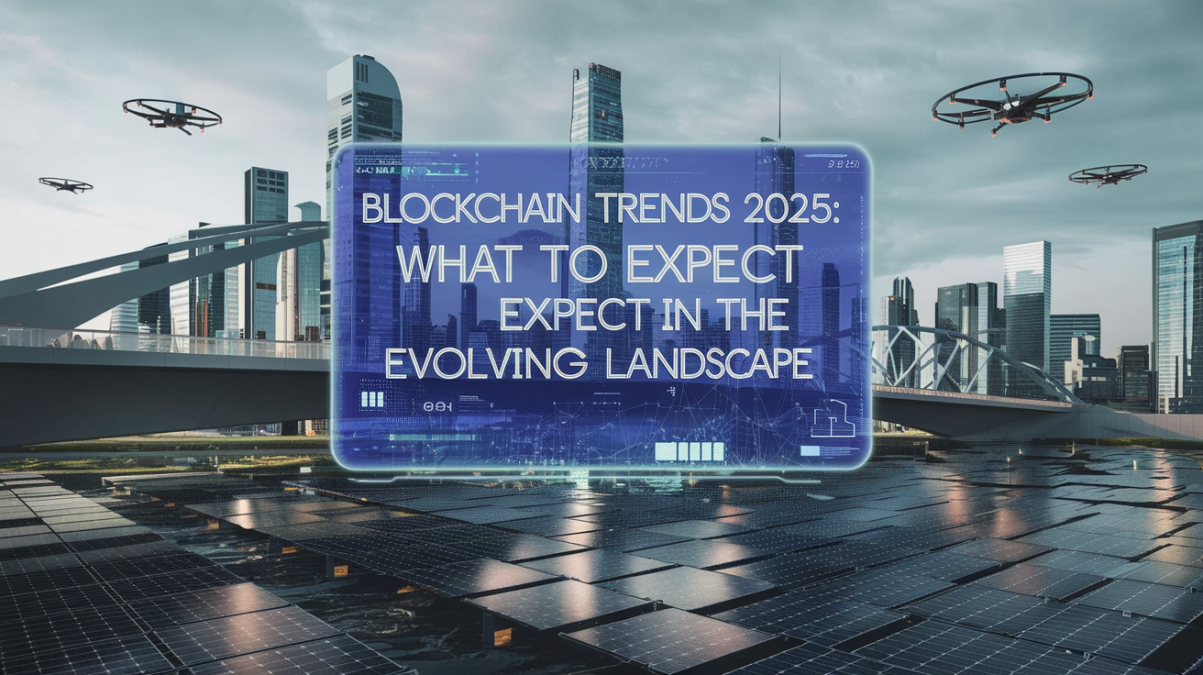
Blockchain Trends 2025: Blockchain technology is no longer a niche concept; it has evolved into a mainstream innovation transforming various industries. But what will blockchain look like in 2025? How will it change our daily lives and business operations? From enhanced security to new financial models, blockchain trends 2025 will be game-changing. Let’s dive into the future of blockchain and explore the most exciting trends that will shape the digital world.
1. Decentralized Finance (DeFi) Expansion
Decentralized Finance (DeFi) is experiencing a remarkable surge in growth like never before. By 2025, DeFi platforms will offer more sophisticated financial services, from lending to insurance, without traditional banks. Expect lower fees, increased security, and wider accessibility, making financial independence a reality for millions.
2. NFTs Beyond Digital Art
Blockchain Trends 2025: Non-fungible tokens (NFTs) started as digital art collectibles but are evolving into real-world applications. In 2025, NFTs will be used in real estate, digital identities, gaming assets, and intellectual property rights, revolutionizing ownership and authentication processes.
3. Blockchain in Supply Chain Management

Companies are leveraging blockchain for transparency in supply chains. By 2025, blockchain-powered supply chains will ensure product authenticity, reduce fraud, and improve efficiency in industries like pharmaceuticals, food, and electronics.
4. Central Bank Digital Currencies (CBDCs)
Governments around the globe are investigating the potential of Central Bank Digital Currencies (CBDCs). By 2025, many nations will have launched their own digital currencies, streamlining transactions, reducing costs, and improving financial inclusion.
5. Energy-Efficient Blockchain Solutions

One major criticism of blockchain is its energy consumption. In 2025, expect sustainable blockchain solutions using Proof-of-Stake (PoS) and other green protocols, making blockchain more environmentally friendly.
6. Interoperability Among Blockchains
Currently, different blockchains operate in isolation. Future trends will see greater interoperability, allowing seamless transactions between networks, enhancing efficiency and usability across blockchain ecosystems.
7. Smart Contracts 2.0
Smart contracts are getting smarter! The next generation will offer enhanced security, auto-updating capabilities, and AI-driven decision-making, broadening their application beyond finance into healthcare, law, and governance.
8. Blockchain and Artificial Intelligence (AI) Integration
The fusion of AI and blockchain will unlock new possibilities, from predictive analytics in finance to AI-generated smart contracts, enhancing automation, security, and data integrity.
9. Increased Security Measures in Blockchain
Cybersecurity threats continue to evolve. Blockchain in 2025 will incorporate advanced encryption, quantum-resistant algorithms, and multi-layer security frameworks to counteract cyber risks.
10. Regulatory Developments and Compliance
Governments are catching up with blockchain regulations. In 2025, expect clearer guidelines on crypto assets, DeFi, and data privacy, ensuring safer adoption for individuals and businesses.
11. Metaverse and Blockchain Convergence
The metaverse and blockchain are becoming inseparable. Future blockchain trends will support metaverse economies, enabling digital ownership, secure transactions, and decentralized virtual experiences.
12. Enterprise Blockchain Adoption
More businesses will integrate blockchain to streamline operations, enhance data security, and optimize transactions. From retail to healthcare, blockchain’s influence in enterprise solutions will continue to expand.
13. Tokenization of Real-World Assets
Imagine owning a fraction of a luxury property or artwork via blockchain. Tokenization will unlock new investment opportunities by converting real-world assets into digital tokens, increasing accessibility and liquidity.
14. Privacy-Focused Blockchain Innovations
As concerns over digital privacy grow, blockchain trends in 2025 will emphasize zero-knowledge proofs (ZKPs) and private transactions, ensuring data security without compromising transparency.
15. Blockchain in Healthcare and Identity Management
Blockchain’s role in healthcare and identity management will be crucial. Secure patient records, decentralized identity verification, and fraud prevention will improve efficiency in these critical sectors.
Conclusion: Blockchain Trends 2025
Blockchain Trends 2025: The blockchain landscape in 2025 will be more integrated, secure, and sustainable. From revolutionizing finance to redefining ownership and security, blockchain trends 2025 will continue shaping the digital economy. Businesses and individuals should stay informed and ready to embrace these transformative innovations.
FAQs About Blockchain Trends 2025
1. What industries will benefit the most from blockchain trends in 2025? Industries like finance, healthcare, real estate, gaming, and supply chain management will see major benefits from blockchain innovations.
2. How will blockchain become more energy-efficient by 2025? Blockchain networks will adopt energy-efficient models like Proof-of-Stake (PoS) and integrate renewable energy solutions to reduce their carbon footprint.
3. Will blockchain regulations become stricter in 2025? Yes, governments worldwide are working on clearer regulations for blockchain technology, ensuring compliance while fostering innovation.
4. How will NFTs evolve beyond digital art? NFTs will expand into real estate, gaming, intellectual property rights, and identity verification, offering broader real-world applications.
5. What role will AI play in blockchain trends 2025? AI will enhance blockchain security, optimize smart contracts, and improve data analytics, making blockchain systems more efficient and automated.